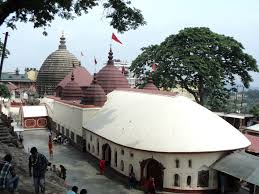
The Kamakhya Temple in Assam stands as a unique testament to the celebration of femininity and fertility within Hinduism. Dedicated to Goddess Kamakhya, this temple is renowned for its association with the divine feminine and the annual Ambubachi Mela, which honors the goddess’s menstruation.
Historical Background
Situated atop the Nilachal Hill in Guwahati, Assam, the Kamakhya Temple is one of the oldest centers of Tantric practices. Its origins trace back to the 8th-9th centuries, with significant reconstructions over time, notably by the Koch King Nara Narayan and the Ahom kings. The temple’s architecture reflects a blend of indigenous styles, known as the Nilachal type.
The Legend of the Menstruating Goddess
According to Hindu mythology, the Kamakhya Temple marks the site where the yoni (womb and genitals) of Goddess Sati fell when Lord Shiva carried her dismembered body across the universe. This event is central to the Shakti Peetha tradition, where each site corresponds to a body part of the goddess.
The temple’s sanctum sanctorum houses a yoni-shaped stone, symbolizing the goddess’s creative power. Unlike many temples, there is no idol; instead, the natural rock formation is revered, emphasizing the sanctity of the feminine principle.
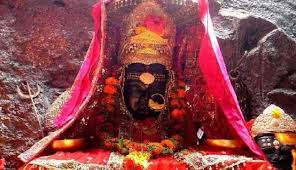
Ambubachi Mela: Celebrating the Divine Cycle
Every year, during the monsoon season in June, the Kamakhya Temple observes the Ambubachi Mela, a four-day festival celebrating the goddess’s annual menstruation. During this period, the temple remains closed, symbolizing the goddess’s seclusion. On the fourth day, after rituals and purification, the temple reopens, and devotees flock to receive blessings.
The festival draws thousands of pilgrims, including ascetics and tantric practitioners, who gather to honor the goddess’s fertility and the power of creation. The event challenges societal taboos surrounding menstruation, presenting it as a divine and natural process.
Tantric Practices and Worship
Kamakhya Temple is a significant center for Tantric worship, particularly within the Shakta tradition. The rituals performed here often involve esoteric practices aimed at harnessing spiritual energy. The temple complex also houses shrines dedicated to the ten Mahavidyas, representing different aspects of the divine feminine.
Architectural Significance
The temple’s architecture is a fusion of indigenous and classical styles. The main dome resembles a beehive, characteristic of the Nilachal style, and is surrounded by smaller domes and spires. Intricate sculptures and carvings adorn the temple walls, depicting various deities and mythological scenes.
Cultural Impact and Modern Relevance
Kamakhya Temple’s unique focus on the feminine and its open celebration of menstruation offer a progressive perspective within traditional religious practices. In a society where menstruation is often stigmatized, the temple stands as a symbol of reverence for the natural cycles of womanhood.
The temple continues to be a site of pilgrimage and spiritual exploration, attracting devotees and tourists alike. Its festivals and rituals provide insight into the rich tapestry of Indian religious and cultural traditions.
Visiting Kamakhya Temple
For those interested in experiencing the spiritual ambiance of Kamakhya Temple:
- Location: Nilachal Hill, Guwahati, Assam, India.
- Best Time to Visit: During the Ambubachi Mela in June or the Navaratri festival in October.
- Accessibility: Guwahati is well-connected by air, rail, and road. The temple is approximately 8 km from the city center.
Kamakhya Temple’s celebration of the menstruating goddess challenges conventional norms and highlights the sanctity of the feminine. It serves as a powerful reminder of the diverse and inclusive nature of spiritual practices in India.